
Let's talk about your production
One platform, set up for your factory
We listen to how you produce and decide together which modules you need. Installation is done on site and training is included.
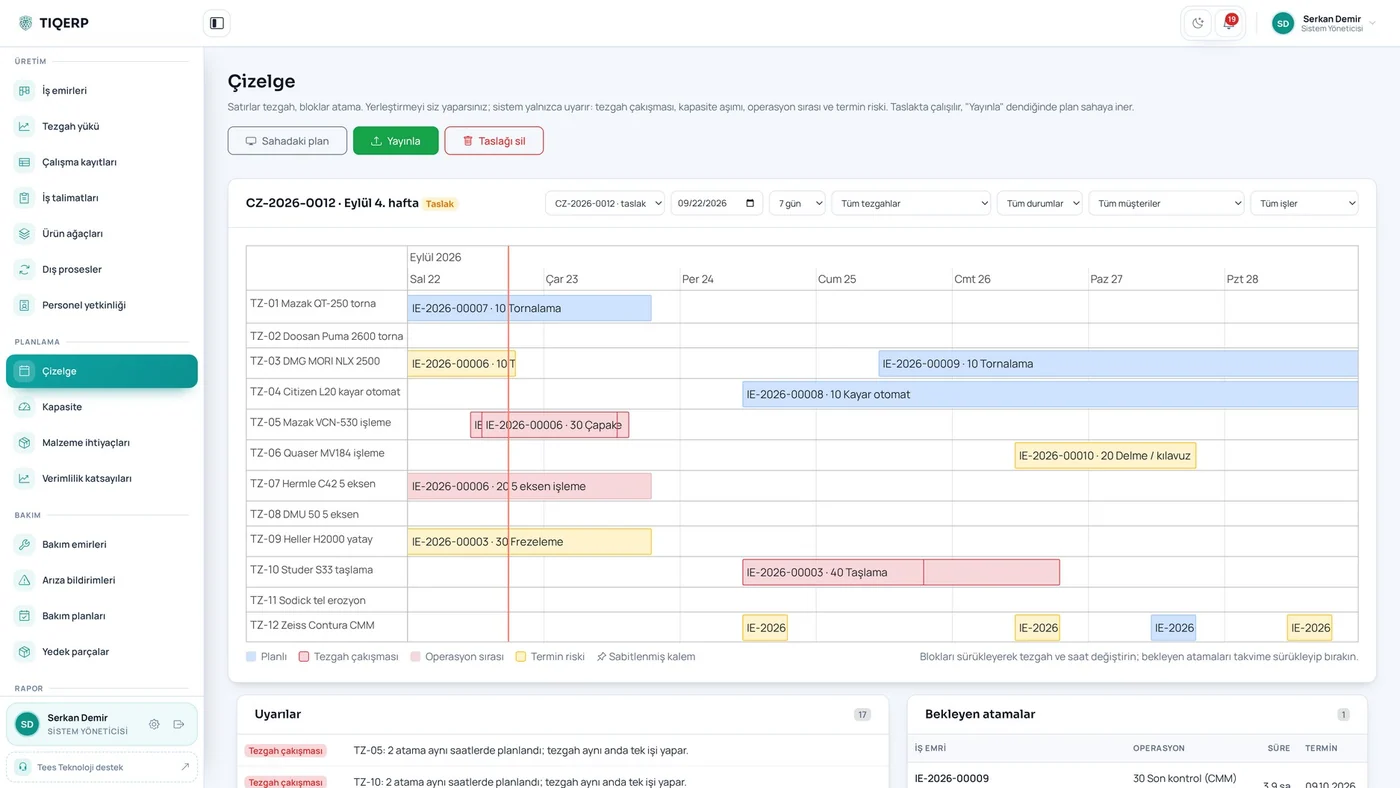
Scheduling, capacity and material requirements on one screen: conflicts, overload and delivery risk appear before the job reaches the floor.
Scheduling, capacity and material requirements on one screen: conflicts, overload and delivery risk appear before the job reaches the floor.
Click a card to see the screen
In a machine shop the delivery date usually lives in three separate places: the promised date on the order, the real status of the job at the machine, and whether the material has arrived on the purchasing desk. Until those three come together the delay is invisible — and by the time they do, there is no new date left to offer the customer.
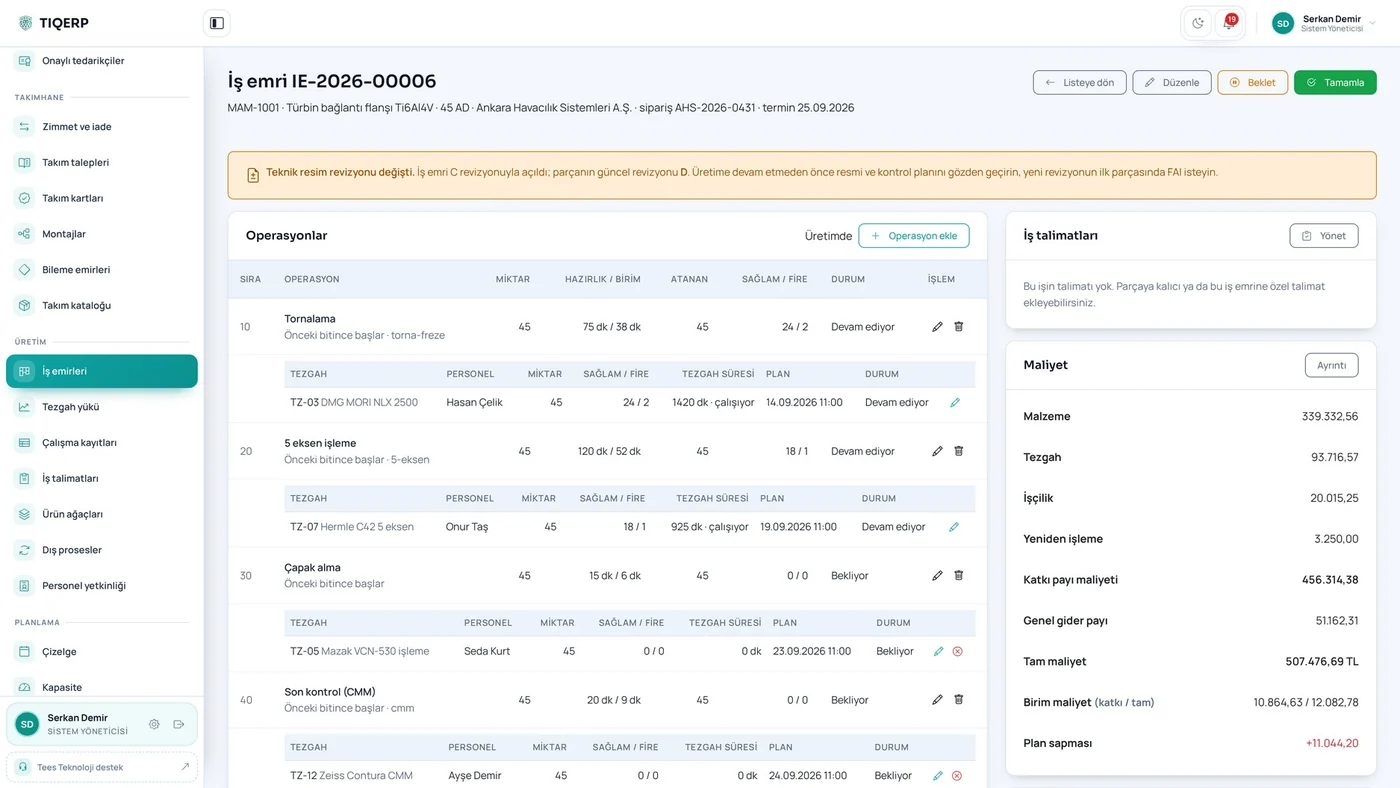
TIQERP puts all three on the same schedule. The moment a job is planned, it is clear which machine will run it, for how long and with which material; anything missing is flagged on the plan itself.
How many minutes a machine can work in a day is not an estimate: it is calculated from the shift calendar with breaks and public holidays deducted, and shifts crossing midnight are supported. A machine under maintenance or broken down loses its capacity for that day automatically and the schedule warns accordingly.
Planned durations rarely hold exactly on the floor. The system calculates an efficiency factor for each machine from past jobs and offers it as a suggestion; once you accept it, the plan moves closer to reality. Where there is not enough history the factor is not applied, so the system does not mislead you with thin data.
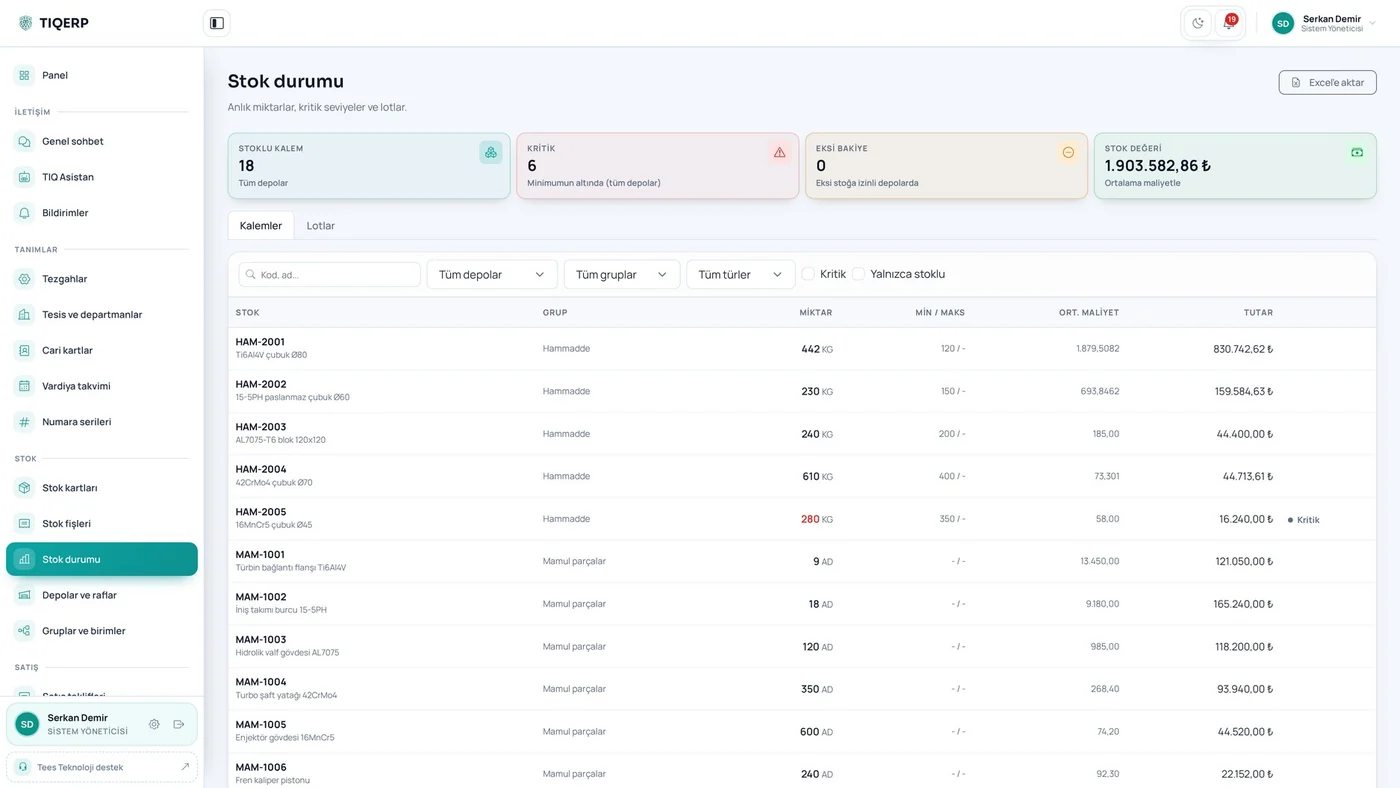
The material requirement list compares what the planned jobs need against the stock balance. Shortages are listed and turn into a purchase request with one click, and the request stays linked to that work order. "The machine is idle, the material is on its way" becomes visible weeks in advance.
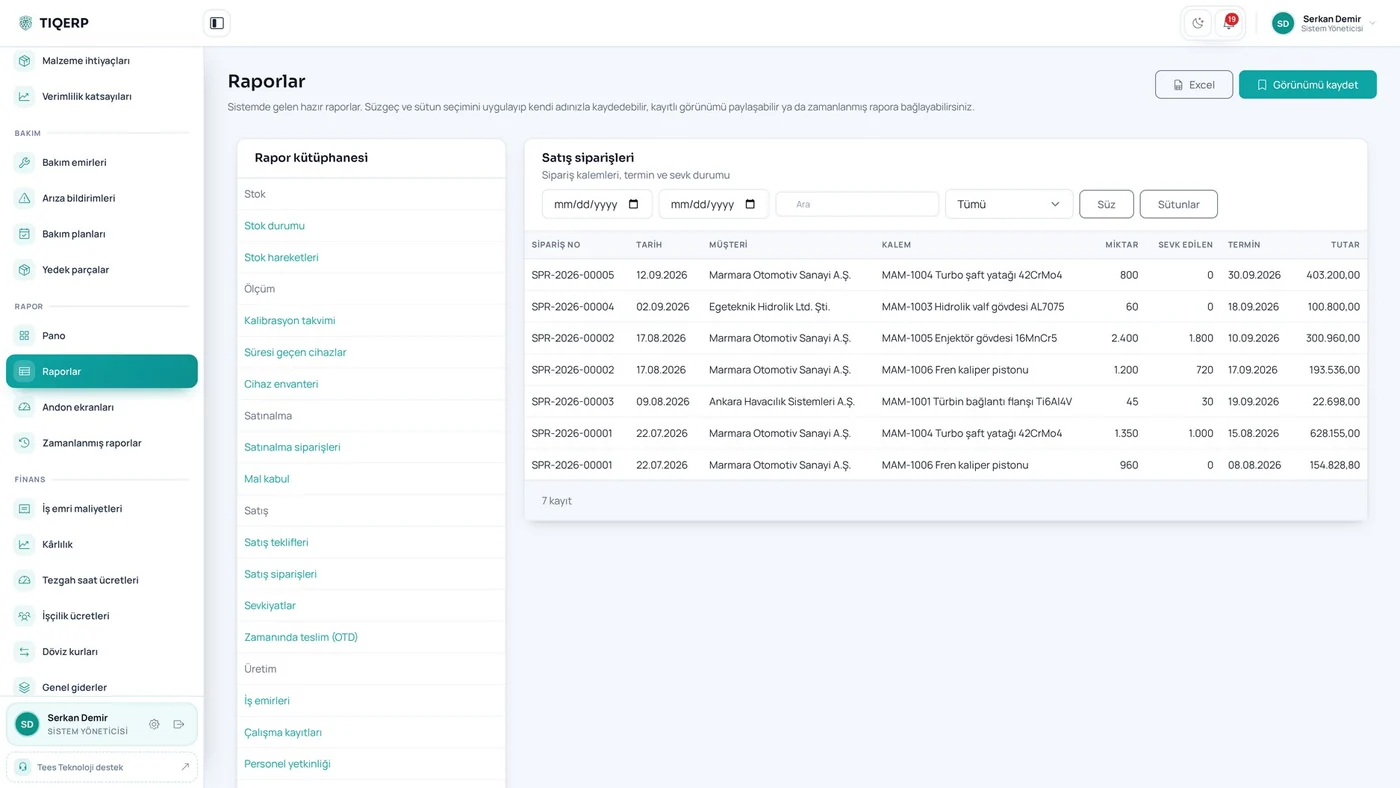
The on-time delivery report shows kept and missed promises together with their reasons: late material, a machine breakdown, rework, or a duration that was never realistic. You look at that data when you quote the next delivery date.
We listen to how you produce and decide together which modules you need. Installation is done on site and training is included.