Let's talk about your production
One platform, set up for your factory
We listen to how you produce and decide together which modules you need. Installation is done on site and training is included.
Customer audits, full traceability and delivery pressure managed together, with production data that never leaves the factory.
Customer audits, full traceability and delivery pressure managed together, with production data that never leaves the factory.
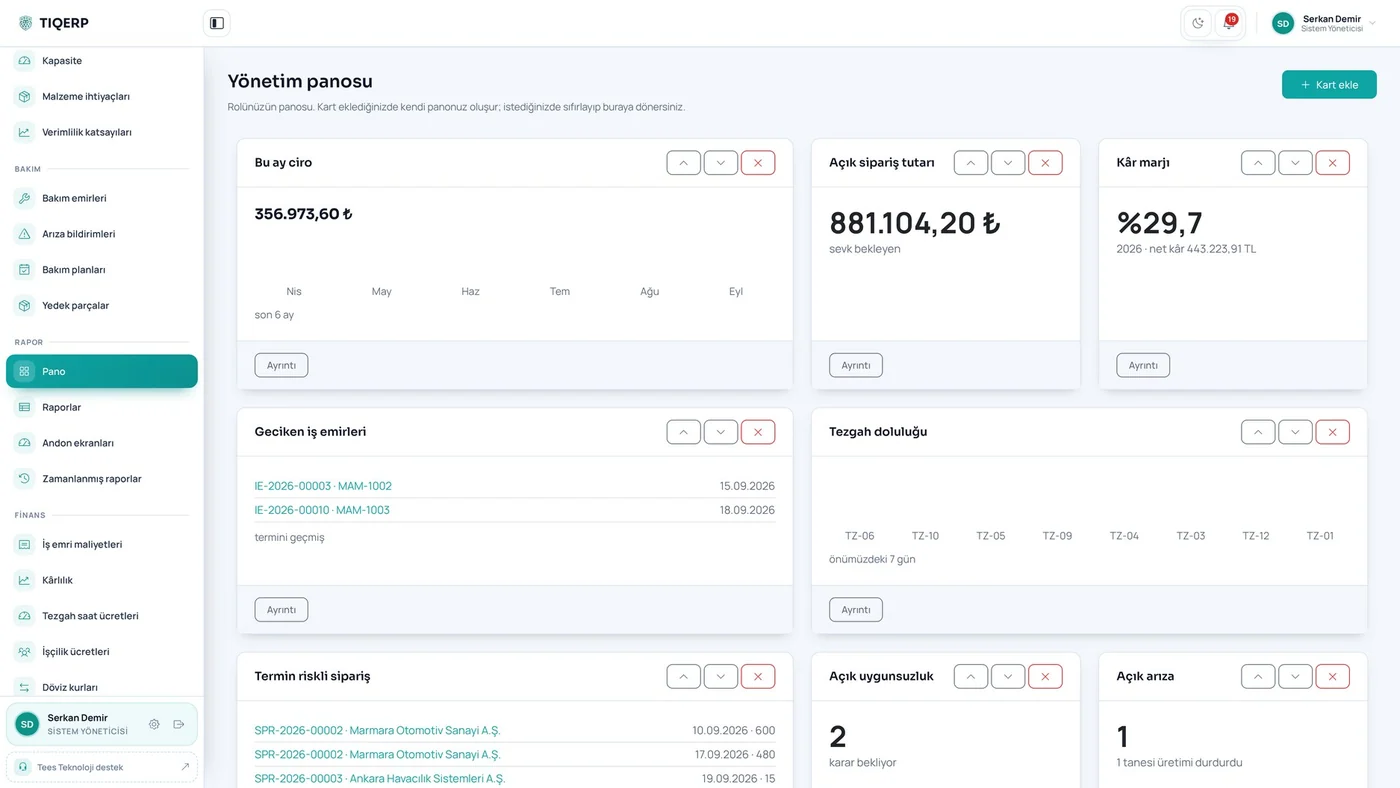
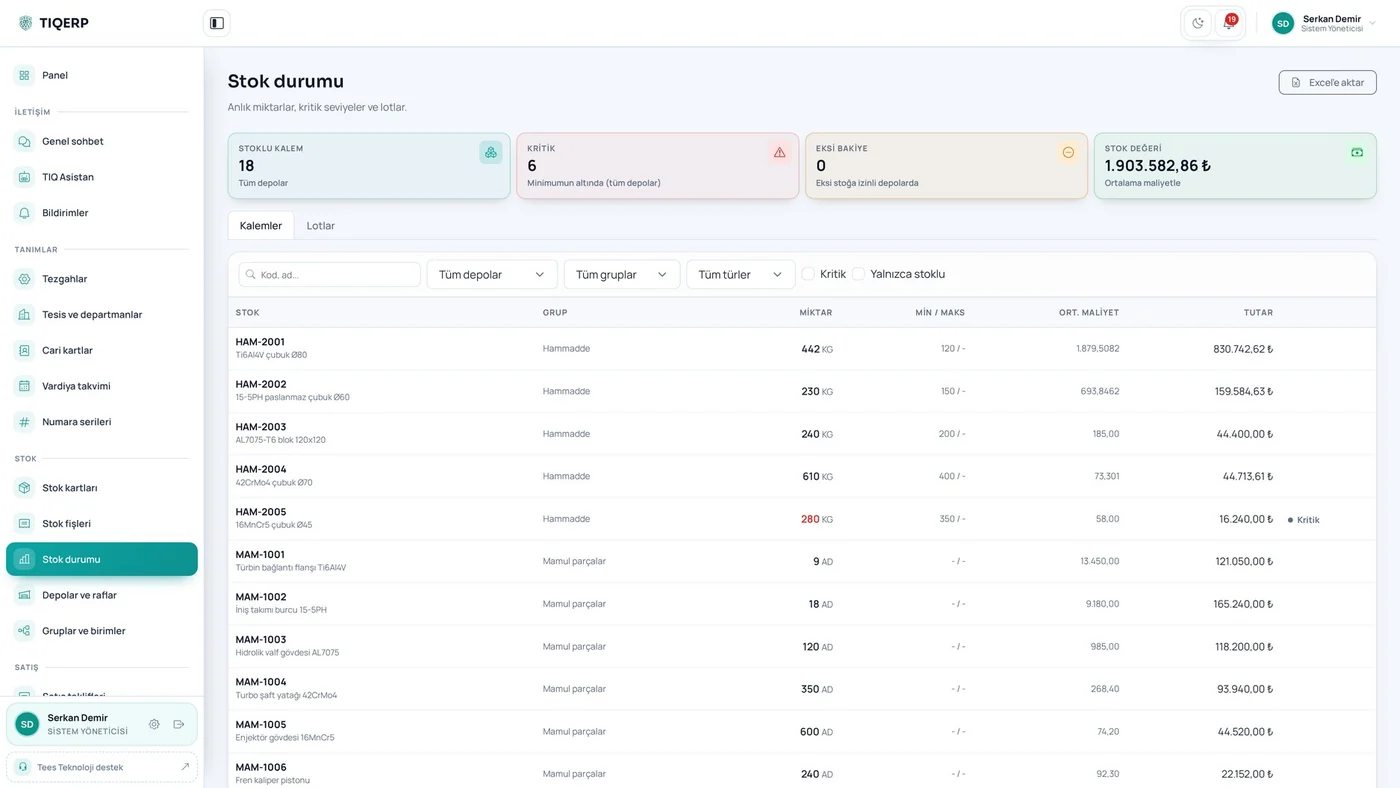
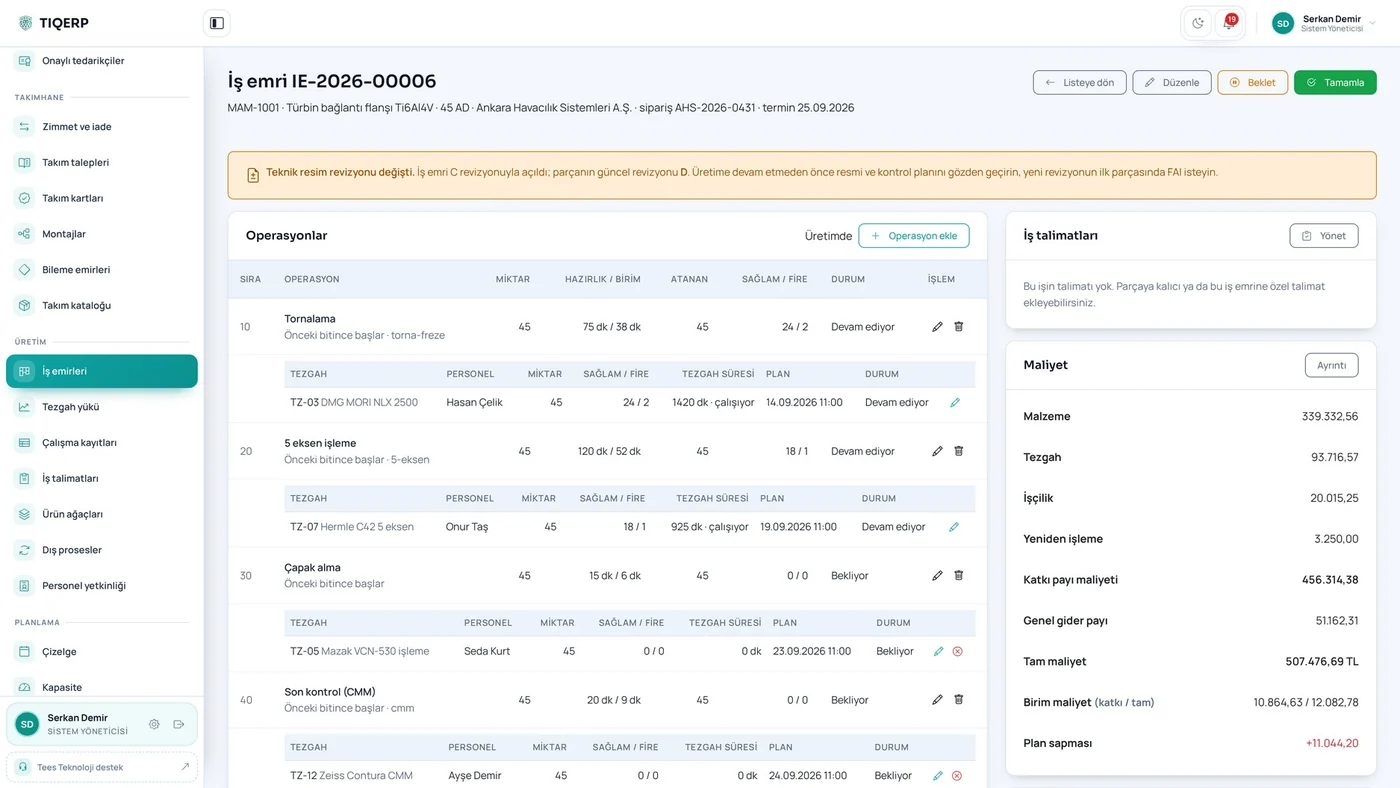
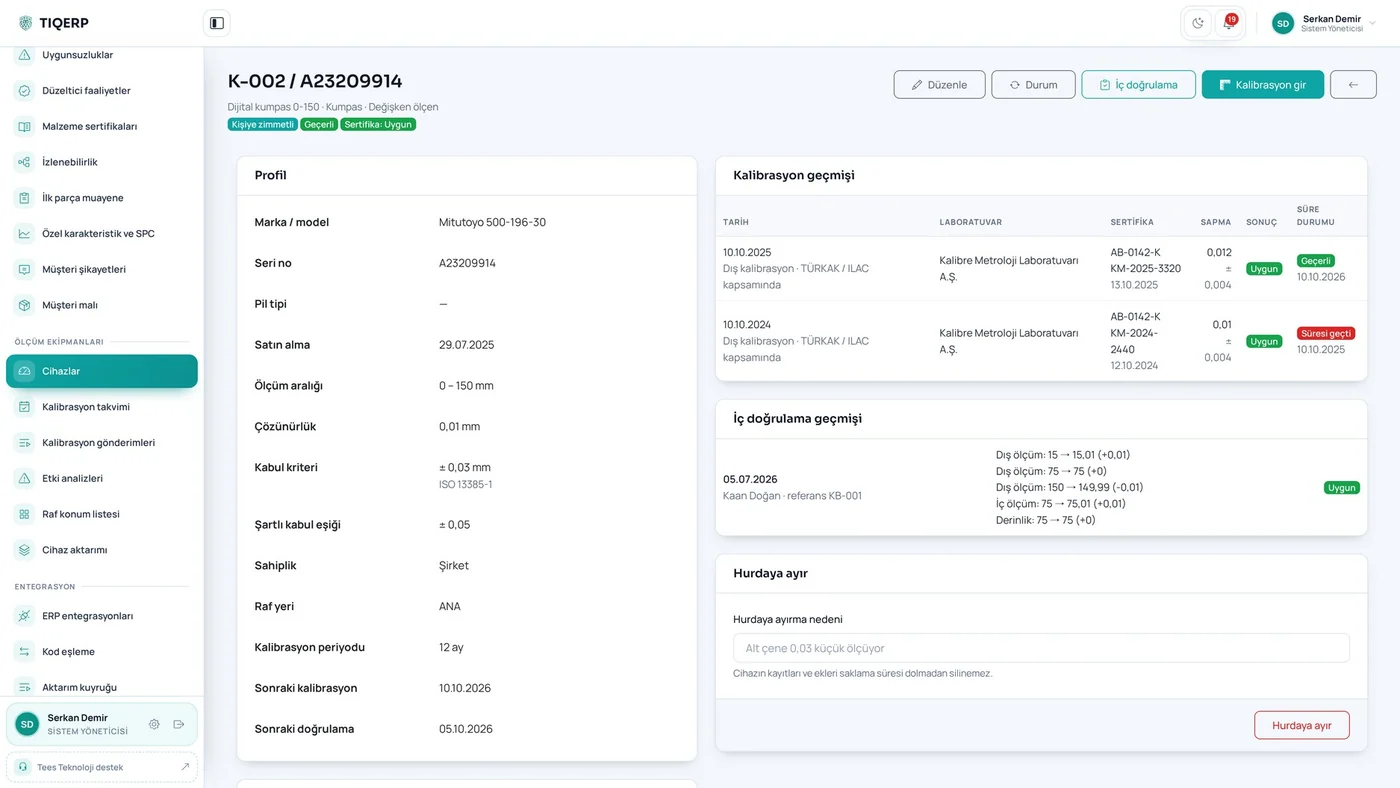
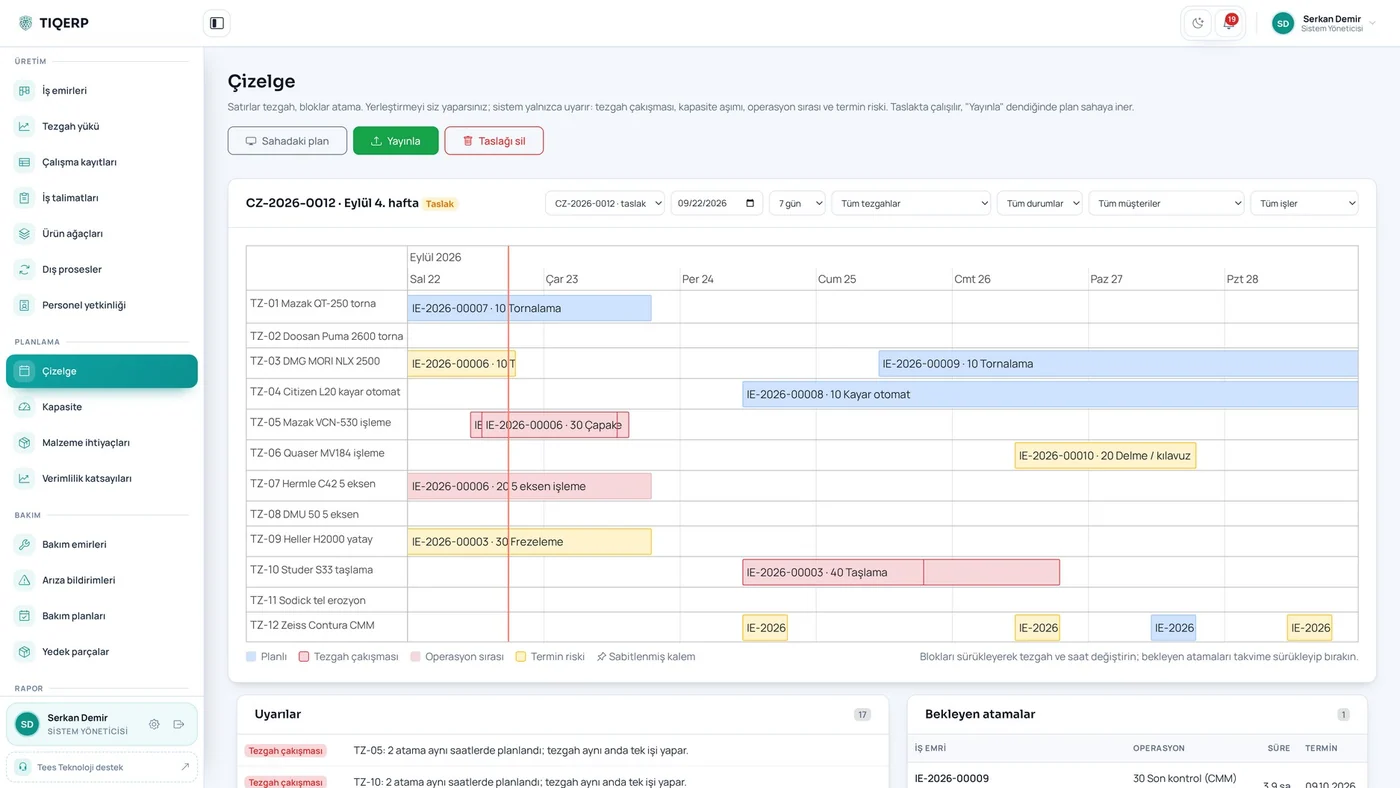
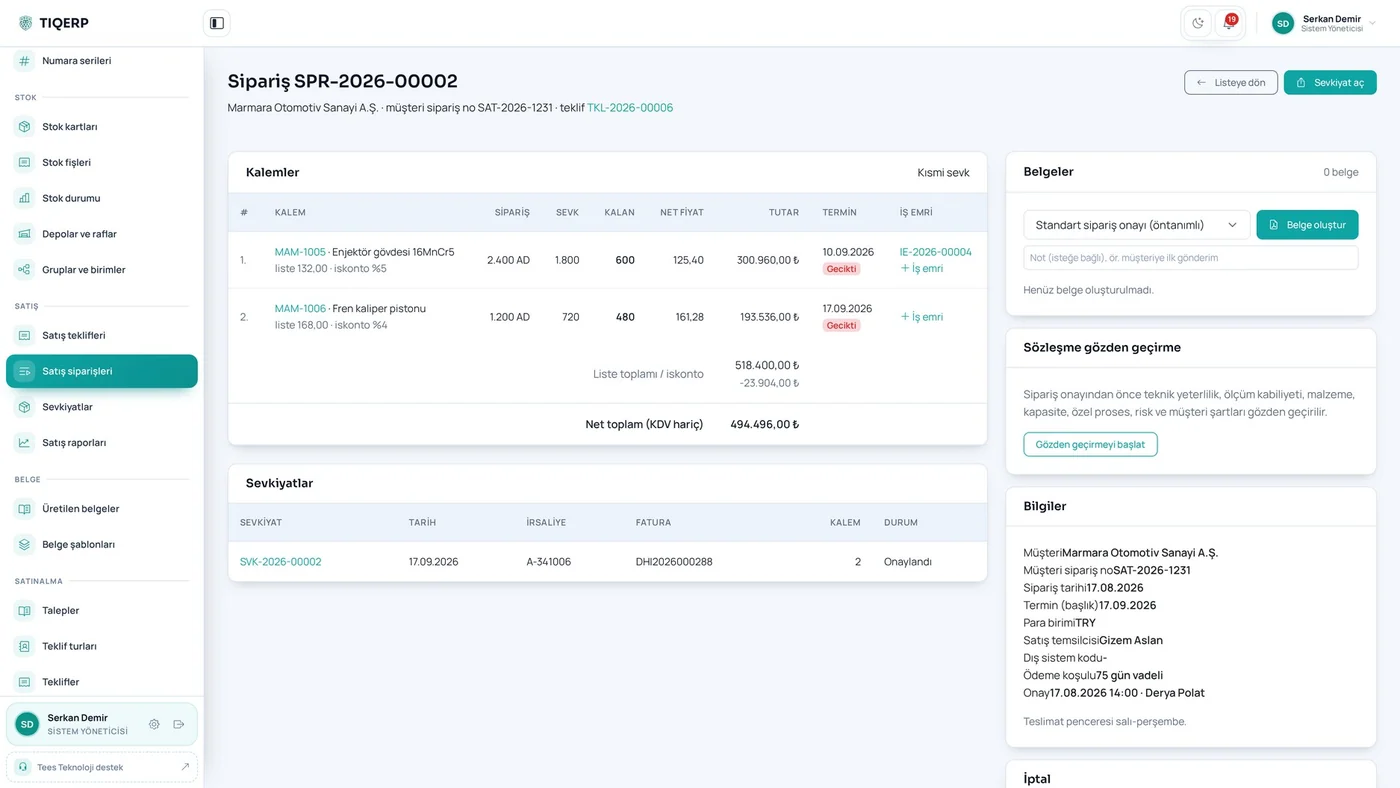
Each card opens the real screen behind it
In a shop working for aerospace and defence customers, the job does not end when the part is made. When the customer audit arrives you are asked to show which material lot the part came from, which revision it was machined to, which gauge measured it and who approved it. At the same time the delivery pressure continues, and this work usually arrives in small batches with frequent revisions.
Those three burdens — traceability, audit records and delivery dates — are kept in three different places in most shops: production tracking somewhere, quality folders somewhere else, and cost estimated at month end. TIQERP brings all three onto the same record.
This is the first question in this sector. TIQERP is installed on the factory's own server; production data, drawings and quality records never leave the site. The system can run on a closed network and needs no internet connection apart from the initial setup and licence activation. That is why cloud-only solutions are eliminated early in this supply chain.
In TIQERP the routing belongs to the work order, not to the part. The same part can be produced on a different machine in the next order, and an operation can be split across two machines. When the customer sends a new revision, open work orders for that part are flagged and a new first article inspection can be required.
Records are not gathered before the audit; they are created as the work is done. From one lot number you reach backwards to the raw material batch, its certificate, the work order, the operator, the tools used and the measurements taken — and forwards to every part made from that batch and the customers they went to.
We listen to how you produce and decide together which modules you need. Installation is done on site and training is included.