
Let's talk about your production
One platform, set up for your factory
We listen to how you produce and decide together which modules you need. Installation is done on site and training is included.
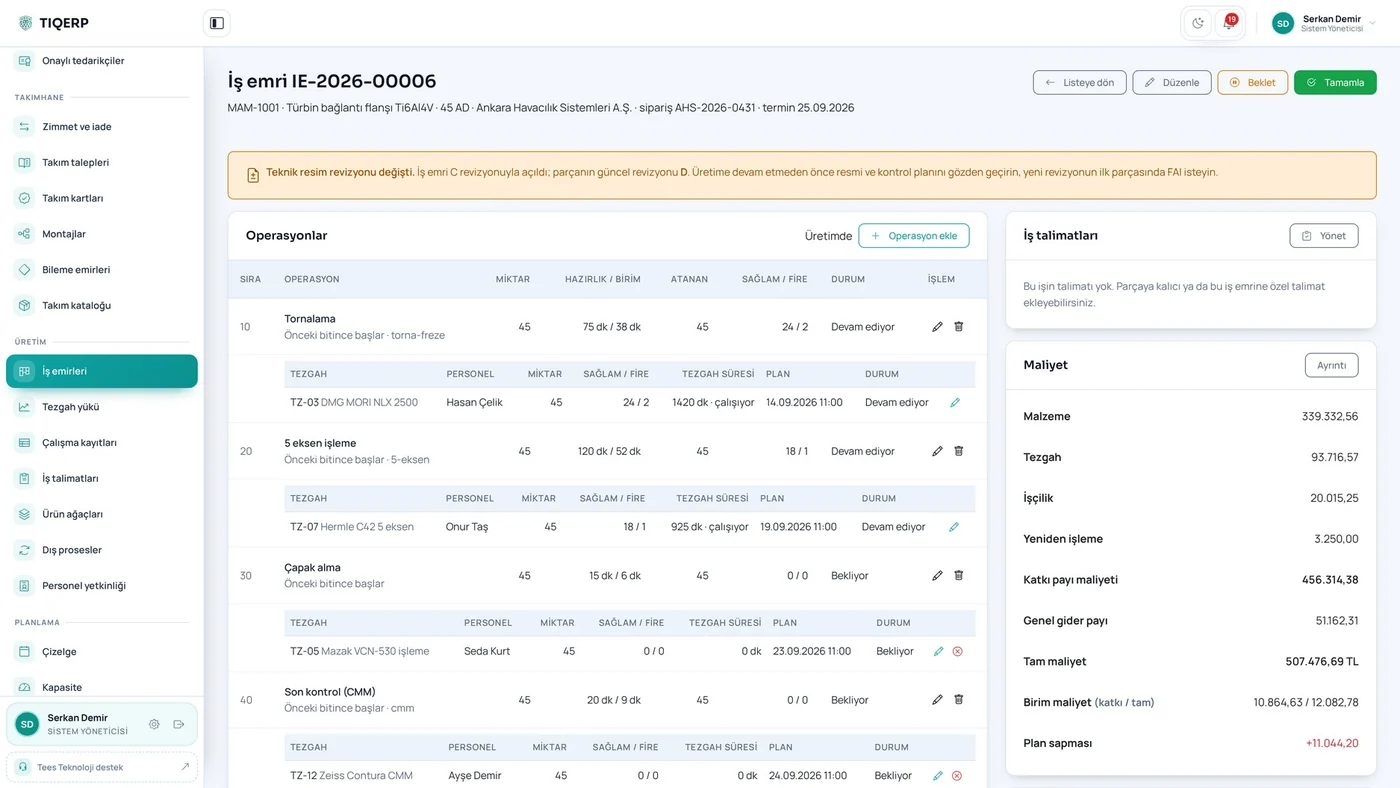
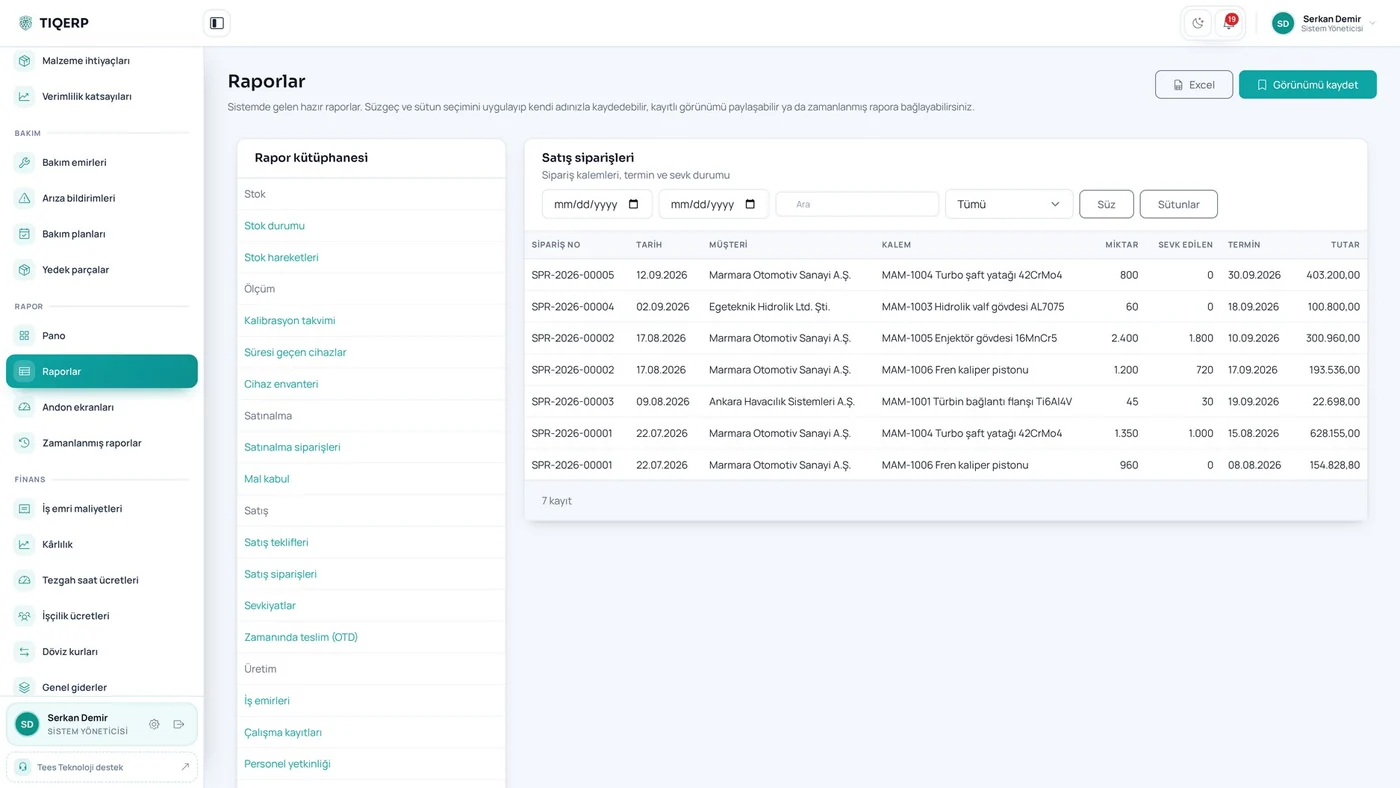
Machine hourly rate, labour, material, scrap and outsourcing: how to arrive at the real cost of a part.
Machine hourly rate, labour, material, scrap and outsourcing: how to arrive at the real cost of a part.
Click a card to see the screen
The real cost of a part is the sum of these:
The last two must be shown separately. Mixed into the total, the source of the loss is invisible — yet that is the instructive part. If a part consistently runs at eight per cent scrap, the problem is not in the price but in the process.
In most shops this number has either never been calculated or was worked out once, years ago. The calculation is simple:
Hourly rate = (annual depreciation + energy + maintenance + rent share + other fixed costs) ÷ planned annual running hours
The denominator is not an estimate: it comes from the shift calendar, with breaks and holidays deducted. If maintenance costs are tracked in the system they enter the calculation automatically. Keep an effective date on the rate so that old work orders keep the old rate and past periods stay comparable.
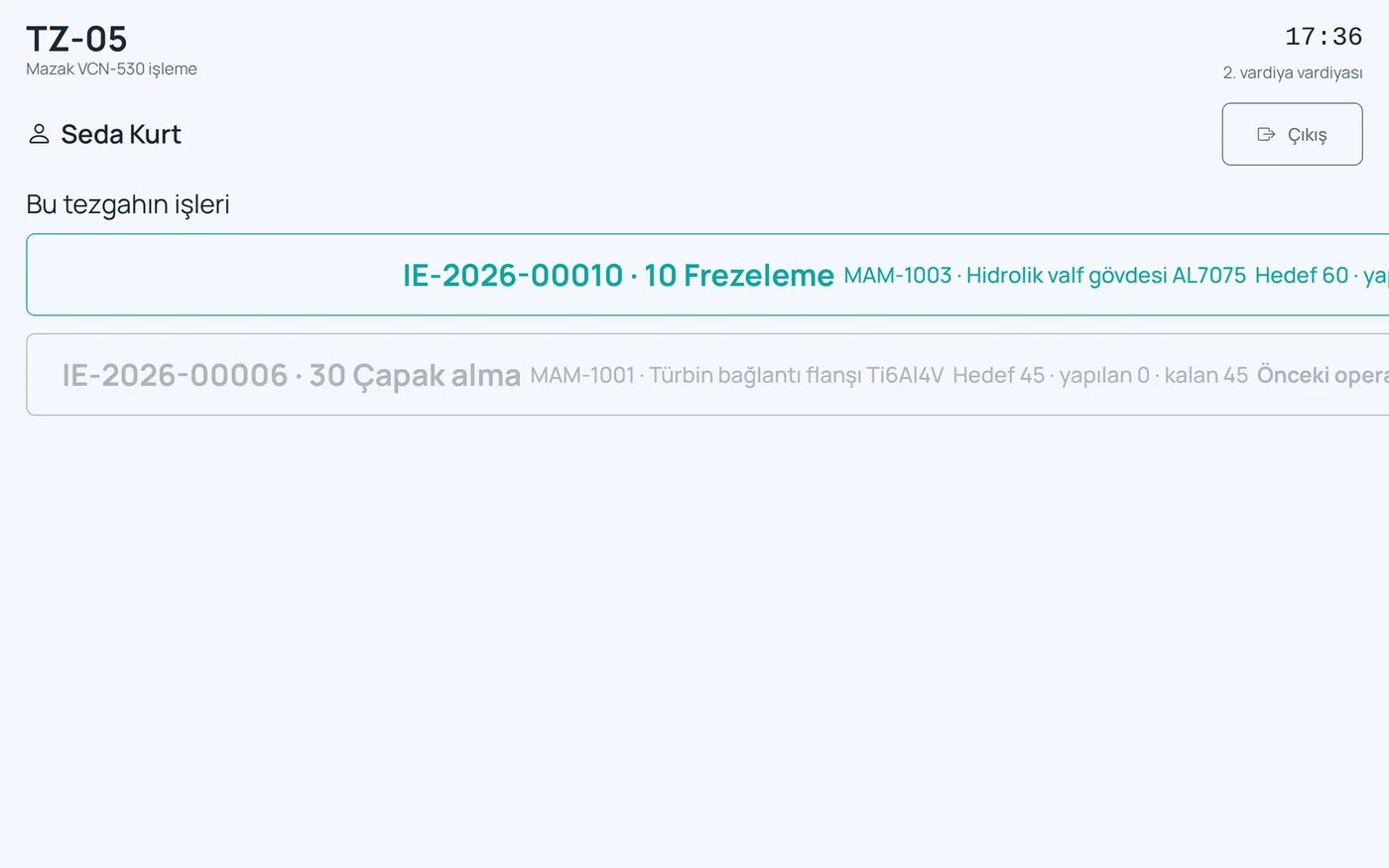
If one operator runs two machines at once, the machine cost is calculated from the raw duration — the machine really was busy that long. Labour, however, is calculated from the shared duration, because the person is paid once. Without that distinction labour doubles and the cost table is systematically wrong. In shops where operators run several machines, this single rule decides the accuracy of costing more than anything else.
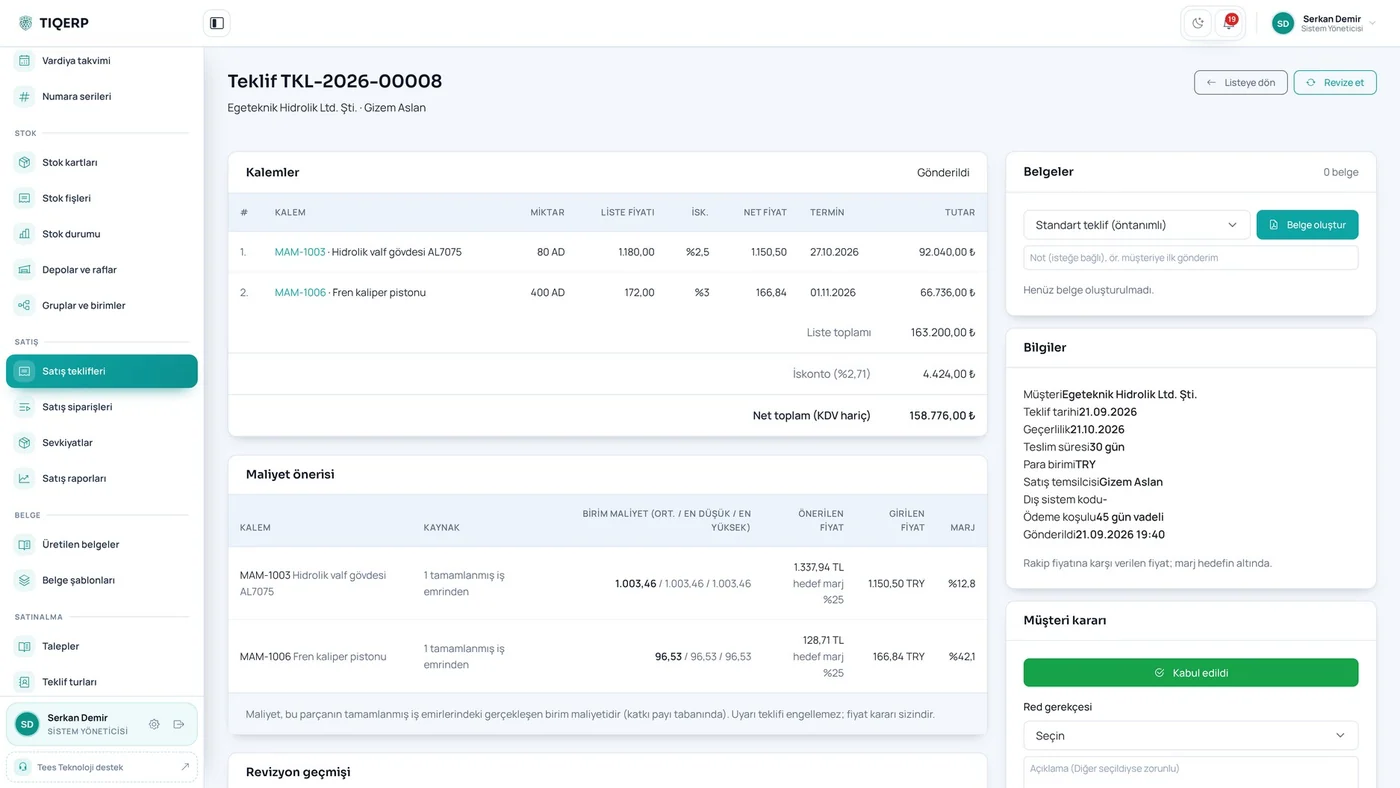
The planned cost calculated when the work order is released and the actual cost at the end of the job should sit side by side. The gap tells you which assumption did not hold: did the duration grow, did scrap increase, did the outsourced process cost more than expected? When that gap is in front of you as you price the next quotation, the price rests on your own data rather than on a guess.
We listen to how you produce and decide together which modules you need. Installation is done on site and training is included.