
Let's talk about your production
One platform, set up for your factory
We listen to how you produce and decide together which modules you need. Installation is done on site and training is included.
August 26, 2026
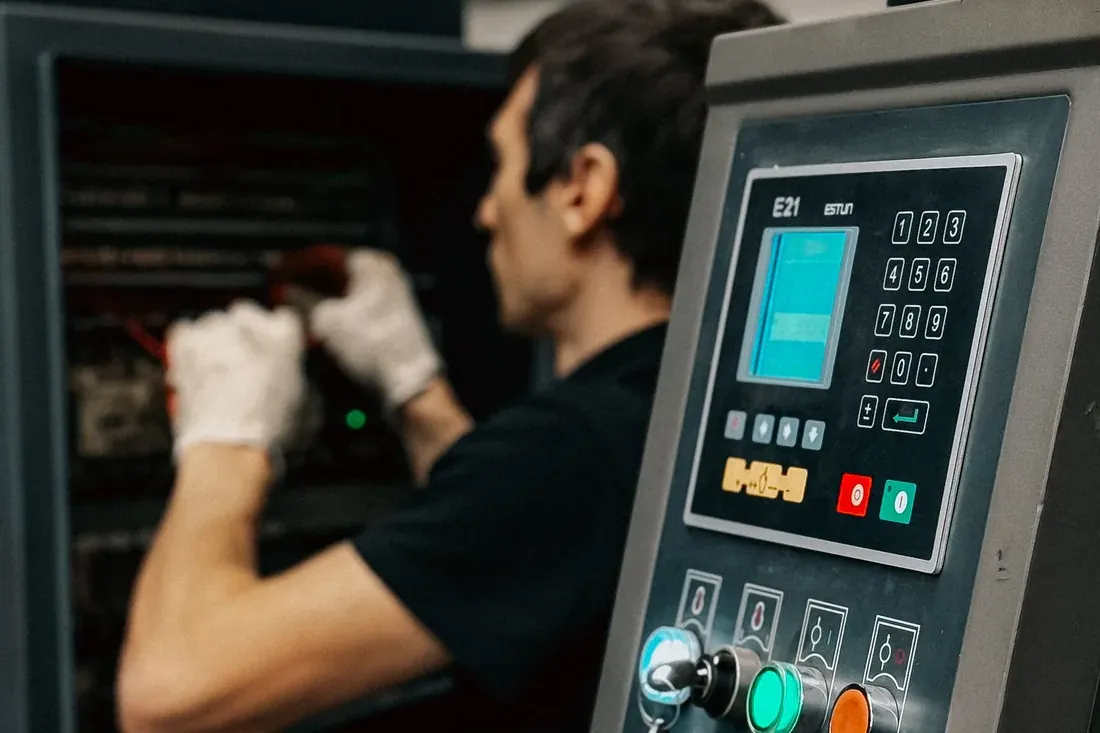
In shops that have just started tracking production, the first report to appear is machine downtime. The numbers look impressive — 180 hours stopped this month. Then nobody knows what to do with it, because where the time went is not written anywhere.
A downtime reason is only accurate if it is recorded as the stoppage happens. Ask at the end of the shift and you get a guess; ask a week later and nobody remembers. That is why the reason must be picked from a list the moment the pause button is pressed at the terminal.
A thirty-item list does not work on the floor; the operator picks the top one. Ten to fifteen items are enough, and they should come from your own reality: tool change, setup, waiting for material, waiting for a drawing, waiting for inspection, machine breakdown, power cut, break, cleaning.
Once reasons are separated, the report becomes actionable. If 60 of those 180 hours are tool changes, you look at tool presetting. If 50 hours are waiting for material, the problem is in purchasing and planning, not on the floor. If 40 hours are waiting for a drawing or an approval, the problem is in your paperwork flow.
Each of those belongs to a different department. A downtime report without reasons only blames production, and nothing changes.
We listen to how you produce and decide together which modules you need. Installation is done on site and training is included.